


How To Shield Your Home From Wildfires in Marin County & Beyond
Marin County homeowners face an uncomfortable reality: wildfires aren’t just a seasonal concern but a year-round threat requiring proactive planning. The devastating fires that have swept through California in recent years have shown how quickly flames can jump from wildland to residential neighborhoods, leaving destruction in their wake. California fire-resistant landscaping offers a proven defense against this threat. By strategically selecting plants, materials, and design elements that resist ignition and slow the spread of fire, property owners can create a buffer zone that protects their homes and families. This approach goes beyond simple plant selection to encompass everything from mulch choices to hardscaping elements. The concept of defensible space, maintained areas around structures where vegetation is managed to reduce fire risk, forms the foundation of fire-smart property design. Combined with careful plant selection and standards for non-combustible mulch in California, these strategies can significantly improve your property’s chances of surviving a wildfire event.Key Strategies for California Fire-Resistant Landscaping:
Creating an effective wildfire-safe yard design requires a comprehensive approach. Here are the essential steps for California fire-resistant landscaping:- Maintain defensible space up to 100 feet around structures, with special attention to the critical first five feet.
- Select fire-resistant plants, such as California natives like ceanothus, manzanita, coral bells, and California lilac, which naturally resist ignition.
- Choose non-combustible mulch materials such as gravel, decomposed granite, or stone chips instead of wood-based alternatives.
- Prune trees regularly and clear accumulated debris to eliminate fuel sources and ladder fuels.
- Space plants appropriately to prevent fire from spreading to adjacent vegetation.
- Add hardscaping elements like patios, stone walls, and walkways that create natural fire breaks.
- Upgrade structural elements, including Class A roofing materials and ember-resistant eaves, to enhance the property’s safety and resilience.
Defensible Space: The First 100 Feet
Defensible space landscaping: Marin County regulations require homeowners to maintain specific zones around their properties, each with distinct management requirements. Each zone plays a key role in fire prevention. Understanding these zones helps prioritize your fire-safety efforts and ensures compliance with local fire codes.The First 5 Feet (Immediate Zone)
The immediate zone should act as a non-combustible barrier. Use materials like decomposed granite, concrete pavers, or stone pathways. Include only highly fire-resistant plants here, such as low-growing succulents, and keep them meticulously maintained. Incorporate water features, stone walls, or patios for added protection, all key elements in California fire-resistant landscaping. Professional defensible space landscaping ensures this zone is maintained correctly.5–30 Feet (Intermediate Zone)
This zone allows for more diverse landscaping while still prioritizing guidelines for fire-resistant plants in California. Keep plants spaced appropriately to prevent fire from spreading, and use efficient irrigation to maintain healthy vegetation. Organic mulch should be kept at least five feet away from structures and replaced with alternative non-combustible mulch in California.30–100 Feet (Extended Zone)
Focus on forest management principles in this outer zone. Properly space trees, remove ladder fuels, and regularly clear dead or dying vegetation. This not only aligns with California fire-resistant landscaping practices but also helps protect tree canopies from ground fires.Choosing Fire-Resistant Plants
Characteristics of Fire-Resistant Plants
Effective California fire-resistant landscaping involves selecting plants with high moisture content, minimal dead material, and compact growth habits that prevent the creation of fuel ladders. Look for plants with thick, fleshy leaves that store water, such as succulents and many California natives. Avoid plants with fine, needle-like foliage, excessive dead material, or high oil content, as these can make them particularly flammable.Recommended California Plants
Fire-smart landscaping tips recommend using several native and adapted plants that perform exceptionally well in fire-prone areas. Some top picks for fire-resistant plants in California include:- Ceanothus varieties (California lilac) for high moisture and vibrant flowers.
- Manzanita species, known for their structure and resilience.
- Coral bells, a versatile groundcover for shaded areas.
- Ice plant, a dense succulent groundcover.
- Buckwheat, which supports pollinators while maintaining fire resistance.
Mulch Selection for Fire Safety
Non-Combustible Mulches
Non-combustible mulch in California standards prioritizes mineral-based materials that won’t contribute fuel to a fire. Decomposed granite offers excellent water retention while creating an attractive, natural appearance that complements most architectural styles. Pea gravel offers excellent drainage and is available in a range of colors to complement your design preferences. Stone chips and crushed rock create durable, long-lasting mulch that requires minimal maintenance while providing maximum fire safety.Organic Mulches (With Caution)
While wood-based mulches, such as bark chips and compost, can be used in limited applications, they should never be placed within 30 feet of structures. When used in outer landscape areas, organic mulches must be kept well-watered and replaced regularly to prevent the accumulation of dry, flammable material. Compost works well for vegetable gardens and flower beds located away from buildings, but requires careful moisture management during fire season. Pairing this with tree healthcare services helps reduce risks while improving soil quality.Hardscaping and Structural Considerations
Fire-Resistant Hardscaping
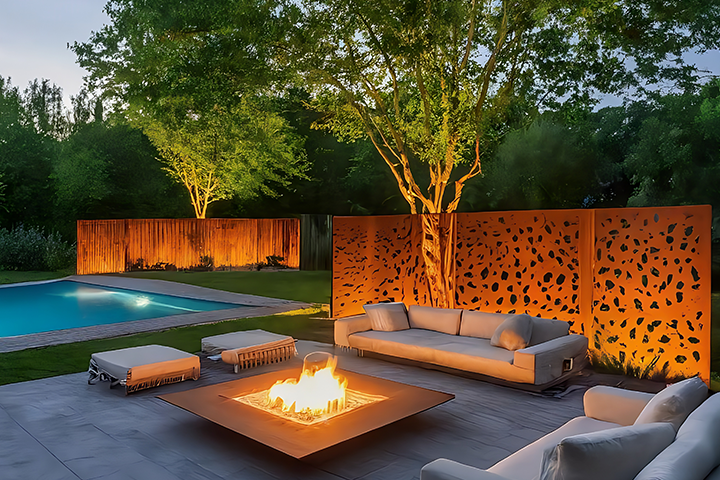
Incorporating hardscaping is a key element of California fire-resistant landscaping. Stone walls, flagstone patios, and concrete walkways create natural firebreaks that can slow or stop fire progression. These elements also provide valuable defensible space without requiring ongoing vegetation management. Gravel pathways and decomposed granite courtyards offer more affordable alternatives while still providing fire-resistant surfaces. Consider connecting these hardscaping elements to create continuous fire breaks around your property’s most vulnerable areas.Roofing and Eaves
Structural improvements complement landscape fire-resistance measures. Class A roofing materials resist ember ignition and provide crucial protection for your home’s most vulnerable surface. Reducing roof overhangs and boxing in eaves eliminates spaces where embers can accumulate and ignite. While these modifications require professional installation, they significantly improve your home’s fire resistance when combined with proper landscaping.Ongoing Vegetation Management
Tree and Shrub Maintenance
Regular pruning removes dead wood and maintains proper spacing between plants. Schedule major pruning for late winter or early spring, before fire season begins, but after the wettest weather has passed. Remove any branches that hang over roof lines or come within 10 feet of chimneys. Clear vegetation from around utility equipment, propane tanks, and other potential ignition sources. During urgent fire conditions, an emergency tree service in Marin County can respond quickly.Seasonal Cleanup
Consistent debris removal prevents the accumulation of fine fuels that ignite easily and burn quickly. Rake up fallen leaves, especially during autumn and dry periods. Remove dead branches, seed pods, and other plant material from gutters and roof surfaces. Pay special attention to areas where debris tends to accumulate naturally, such as fence lines, building corners, and areas with landscape drainage.Why Marin County Homeowners Trust Treemasters
Local expertise makes all the difference when implementing defensible space landscaping Marin County requirements. Treemasters combines deep knowledge of regional fire codes with practical experience in California fire-resistant landscaping applications. Our team understands the unique challenges Marin County properties face, from steep terrain that complicates maintenance to diverse microclimates that affect plant selection. We help homeowners navigate local regulations while creating landscapes that are both beautiful and fire-safe. Built on the principles of honesty, integrity, and craftsmanship, Treemasters delivers:- Fire-smart landscaping that works for real-world conditions
- Proven fire-safety principles with sustainable landscape design
- Increased property value while protecting your investment