


Essential Post-Summer Drought Tree Care Tips in Marin County & Beyond
A dry, hot summer can leave your yard looking a little worse for wear. While you might notice your lawn turning brown, it’s crucial to pay close attention to your trees. After months of minimal rain and high temperatures, trees across Northern California start showing signs of distress. Recognizing these signs early is key to saving your valuable trees from long-term damage.
This guide will walk you through the common tree stress signs California residents should watch for. We’ll cover everything from identifying subtle symptoms to implementing effective drought tree care Northern CA strategies. Understanding these signs will help you protect your landscape and avoid costly issues through early, proactive care.
Tree Stress Warning Signs in California
- Leaves: Yellowing, browning, curling, or scorching at the edges.
- Canopy: Leaves dropping early, resulting in a thinned-out appearance.
- Bark and Roots: Visible cracks in the bark or roots becoming exposed at the soil surface.
- Treatment: Respond with deep, infrequent watering and apply drought-tolerant mulch. Avoid fertilizing stressed trees.
- When to Call for Help: If signs persist, schedule a tree health inspection service in California to assess the damage.
Why California Trees Suffer After Dry Summers
Recent climate patterns in Marin County and throughout Northern California have included prolonged periods of drought, which puts immense pressure on our local ecosystems. Trees, especially those not native to our dry climate, struggle when soil moisture levels plummet. This deficit directly impacts their root systems, which are responsible for absorbing water and essential nutrients.
When roots can’t access enough water, a tree’s entire system begins to weaken. It becomes less capable of fighting off pests and diseases, and its structural integrity can be compromised. Over time, what starts as a thirsty tree can evolve into a significant safety hazard, making proactive care essential. Ignoring these important tree stress signs in California can lead to irreversible decline.
Early Signs of Tree Stress to Watch For
Catching drought stress early gives you the best chance to help your tree recover. Keep an eye out for these common early tree stress signs in California:
- Leaf Discoloration: Leaves may turn yellow (chlorosis) or develop brown, crispy edges. This is one of the most common leaf scorch symptoms in CA.
- Leaf Curling or Wilting: Leaves may curl, wilt, or appear smaller than usual as the tree tries to conserve moisture.
- Early Leaf Drop: Trees might shed leaves in late summer or early fall, long before they normally would. This leads to a noticeably thinner canopy.
- Branch Dieback: You may notice dead twigs and branches, particularly at the top of the tree. This is a clear sign that the tree is struggling to transport water to its extremities.
It’s important to distinguish between drought stress and nutrient deficiency. While both can cause yellowing leaves, leaf scorch symptoms in CA related to drought typically appear as uniform browning along the leaf margins. Nutrient issues often present as mottled or veined discoloration.
How to Check for Root or Internal Damage
Visible leaf symptoms are just one part of the picture. To get a complete understanding of your tree’s health, you need to look deeper.
Gently inspect the area around the base of the tree. The soil may be cracked and pulling away from the trunk, indicating severe dryness. You might also see surface roots that weren’t visible before. Look at the bark for deep cracks or areas where it might be peeling away, as discussed in our guide on common tree root problems. A healthy tree’s bark should be firm and intact.
How to Respond to Tree Stress from Drought
If you’ve identified tree stress signs in California, immediate action can make a significant difference. Proper drought tree care in Northern CA focuses on rehydrating the tree without causing further harm.
Deep Watering
- Instead of frequent, shallow watering, provide a deep soaking every few weeks.
- Use a soaker hose or let a regular hose trickle slowly at the tree’s drip line (the area directly under the outermost branches).
- This encourages deep root growth and ensures water penetrates the soil effectively.
Apply Drought-Tolerant Mulch
- Spread a 2–4 inch layer of organic mulch, like bark chips or leaf compost, around the base of the tree.
- This helps the soil retain moisture, regulates temperature, and suppresses weeds.
- Keep the mulch a few inches away from the trunk to prevent rot.
Time Your Care
- Avoid fertilizing a stressed tree during peak heat.
- Fertilizers encourage new growth, which demands more water and can add stress to an already struggling tree.
What Not to Do After a Dry Summer
- Don’t Over-Prune: While it may be tempting to remove all thinning branches, excessive pruning can add more stress. Only remove clearly dead or hazardous limbs.
- Avoid Trunk Watering: Watering directly at the trunk is ineffective, as the primary water-absorbing roots are located further out at the drip line.
- Steer Clear of Pests: Weakened trees are prime targets for pests and diseases. Monitor your trees closely for any signs of infestation, like insect holes or unusual growths. Learn more in our local pest and disease control guide.
Treating Branch Dieback and Structural Weakness
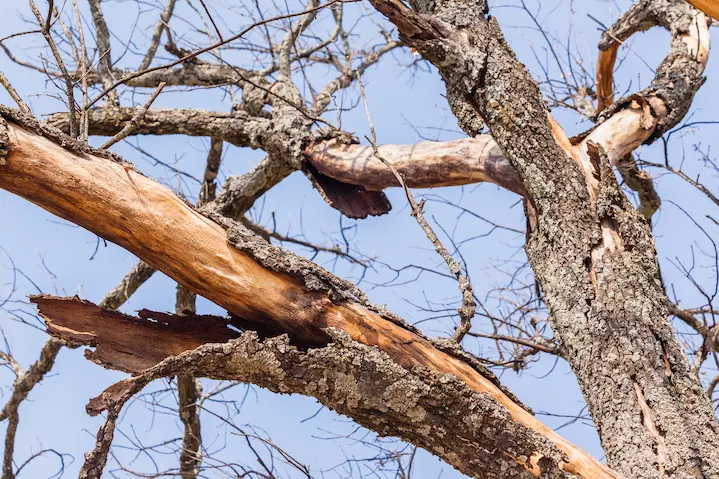
When you see dead branches, it’s a clear sign of distress. Safely removing these limbs is important for the tree’s health and your property’s safety. This is where you need to treat branch dieback CA with care. Identify branches that have no living leaves or buds. Pruning cuts should be made just outside the branch collar (the swollen area where the branch joins the trunk) to promote proper healing.
For larger trees or significant dieback, consider a preventive pruning service in Northern California. Professional arborists can safely remove deadwood, assess the tree’s structural integrity, and make strategic cuts to encourage healthy growth.
When to Call a Tree Health Expert in Marin County
While DIY care can be effective for mild stress, some situations require professional expertise. You should call an arborist to assess tree stress signs in California if:
- Symptoms Persist: Your tree doesn’t improve after you’ve provided deep watering and mulch.
- The Tree is a Hazard: The tree is large, located near your home, power lines, or public pathways, and its structural integrity is a top priority.
- You See Major Damage: Significant branch dieback, large cracks in the trunk, or signs of pest infestation warrant an expert opinion.
Treemasters: Helping Marin County Trees Thrive
An ISA certified arborist can provide the thorough tree health inspection service California residents need for diagnosing underlying issues and creating customized treatment plans. Our tree experts in San Rafael are equipped to help homes and businesses with their tree stress service needs throughout Marin County.
Your trees are valuable assets, providing shade, beauty, and environmental benefits. Protecting them from the harsh effects of a dry California summer is an investment in your property’s future.